
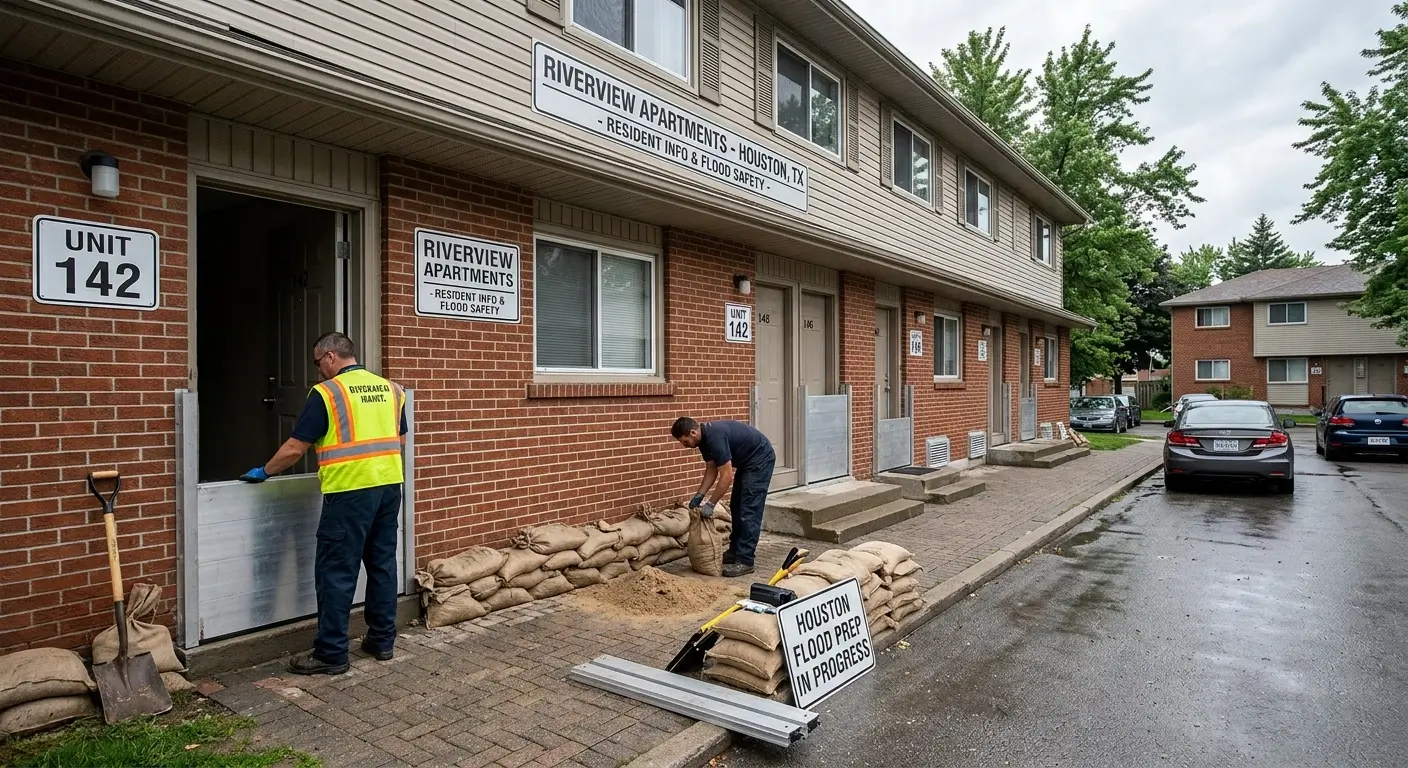
Houston has a complicated relationship with water, considering how clay-heavy its soil is and how often it’s exposed to tropical storms. Pile on the rapid urban development, and the city is now among the most flood-prone metropolitan areas in the country.
For property owners, this isn’t just an abstract risk. It is a consistent threat to property value, tenant safety, insurance costs, and rental income. A single heavy downpour combined with poor drainage can cause significant damage in just one afternoon, so what can landlords do to prevent, or at least minimize the risks?
Key Highlights:
- Flood risk in Houston is not limited to mapped flood zones. Many properties that flooded during past storms were outside the official 100-year floodplain, so FEMA maps alone should not be your only source of information.
- Drainage improvements offer the best return for the lowest cost. Regrading yards, maintaining gutters, and reducing impervious surfaces are relatively inexpensive steps that meaningfully lower flood exposure.
- Elevating critical systems protects against the most expensive damage. HVAC units, electrical panels, and water heaters are often the first things ruined in a flood, and raising them can prevent major repair bills.
- Standard property insurance does not cover flood damage. Landlords need a separate flood policy, through NFIP or a private insurer, to avoid a significant coverage gap.
- Landscaping and storage choices matter even without major construction. Native plants, rain gardens, and relocating stored items or equipment to higher floors can reduce losses at little to no cost.
Understand Your Flood Risk
Before investing in any proactive measures, you must first get a clear picture of the property's flood risk. You can check FEMA’s Flood Map Service Center to identify which flood zone designation the rental property is in. Do note that these maps may be outdated, considering Houston’s rapid development and changing rainfall patterns.
You can also look into local interactive flood maps, as they can be more specific and updated. See if the property has an elevation certificate. If not, you can hire a licensed surveyor to obtain one. It is a low-cost step that lets you conduct a more accurate risk assessment and may qualify for potential insurance premium deductions.
Improve Site Drainage
Houston’s clay soil doesn’t absorb water quickly, and when it does, it can lead to foundation issues. That means the drainage design around your rental property matters enormously. You need to evaluate whether the property’s grading directs water away from the foundation.
Some of the most common practices include:
- Regrading your yard to ensure that the ground slopes away from the foundation at a gentle but consistent pitch
- Including gutters and downspouts during your regular maintenance runs to avoid clogging
- Reducing impervious surfaces like solid concrete driveways when possible, and adding sections with permeable pavers to allow water to soak through rather than run off
- Maintaining nearby storm drains and culverts on or adjacent to the property, since debris buildup is a frequent contributor to localized flooding
The changes are usually far cheaper and low effort, as opposed to post-flood remediation. You can also phase them over time as your budget allows.
Elevate Critical Systems and Vulnerable Areas
If your rental property is in a high-risk flood zone, elevating key systems can prevent the most expensive types of damage even if some water intrusion occurs. Your HVAC units, electrical panels, water heaters, and washer-dryers are often installed at ground level or in garages, making them among the first things to be damaged in a flood. Consider things like:
- Raising your HVAC condensers and electrical panels above expected flood levels
- Installing check valves on sewer lines to prevent floodwater from backing up into the property through the drains
- Elevating outlets and switches in ground-floor units
- Evaluating whether structural elevation of the building itself makes financial sense, which is sometimes supported by FEMA mitigation grants
These upgrades may demand high upfront costs, but they can be very worth it when it means avoiding repetitive losses down the line. They will eventually pay for themselves after a single avoided flood claim.
Reconsider Landscaping and Ground-Floor Use
Landscaping choices affect water absorption more than many landlords realize. Native, deep-rooted plants absorb significantly more water than turf grass. Rain gardens planted in natural low points on the property can capture runoff before it reaches the foundation.
This can be a realistic solution for single-family homes with yards, but for multifamily properties in urban areas, there are other options you can explore. One would be to reconsider where you store your appliances and electrical equipment. Shifting your storage to a higher floor level can make all the difference, and you won’t need to undergo extensive construction to keep your items safe.
Review and Strengthen Insurance Coverage
Standard landlord or property insurance policies typically exclude flood damage, which shows how important it is to review your insurance options carefully. It can be one of the most consequential gaps in coverage that you can face as a Houston landlord, and you shouldn’t have to discover it after you suffered losses.
Flood insurance through the National Flood Insurance Program (NFIP), or through the growing private flood insurance market, should be treated as a baseline requirement for any Houston rental property.
FAQs
Do I need flood insurance if my property is not in a FEMA flood zone?
- Yes. A large share of flood damage in the Houston area has occurred outside mapped high-risk zones. Being outside a designated flood zone lowers your risk but does not eliminate it, so flood coverage is still worth carrying.
How do I find out if my property has an elevation certificate?
- Check with the property's title company, the previous owner, or your local floodplain management office. If none exists, a licensed surveyor can create one, which also supports a more accurate flood risk assessment.
Is elevating a building's structure ever worth the cost?
- For properties in high-risk or repetitive loss areas, yes. While the upfront cost is significant, it can prevent recurring damage and may qualify for FEMA mitigation grants that offset part of the expense.
Investing in Professional Management for Security
Flood prevention in Houston takes ongoing attention, from drainage upkeep to insurance reviews to tenant communication, and juggling all of it on your own can be a lot. If you would rather have experienced professionals handle the day-to-day risk management for your rental property, Precision Realty can help.
Our team can assess your property's flood exposure and coordinate maintenance and mitigation work. We can also keep your coverage and tenant communication on track, so you can protect your investment without managing every detail yourself.
Contact us and learn more about our services.
More Resources:
What Landlords Should Check During Regular Inspections
Best Vendor Management Practices for Houston Rental Properties